


How Serious Was My Dog's Bite? Understanding the Dunbar Bite Scale

A quick note: The Dunbar Bite Scale is an excellent tool for understanding the severity of a bite, but it isn't designed to predict a dog's future or determine whether a dog can be rehabilitated. Every bite should be evaluated in context by an experienced behavior professional. The scale tells us what happened, but not why it happened—and that distinction is extremely important.
I've worked with many dogs who have a bite history, I've even been bit myself. Dog bites feel scary and people sometimes overestimate their severity as a result. The Dunbar scale helps us assess dog bite severity based on data rather than emotion which helps both dogs and humans.
For example, I was recently contacted about a large dog who bit the owner's friend. Based on the description given to me, it sounded like a level 3 bite given without warning. Upon meeting the dog, asking clear questions and seeing the marks left by the dog on the friend, I was able to determine that it was a level 2 bite given with plenty of warning. These women weren't lying to me, their perception of the event was intensified by emotion which is common.

As you know, reactive dogs bark, growl, snap. Occasionally reactive behavior escalates to a bite. When that happens your first question is usually:
"How serious was it?"
Many people assume the loudest, scariest-looking dog is the most dangerous but, that's not always the case.
Professional dog trainers and behavior consultants use a tool called the Dunbar
Bite Scale to evaluate bites objectively—not based on how frightening a dog looked or the event felt, but on the actual injury caused.
I have had dogs who bit. Jake bit several other dogs during his twelve years and Shadow Dawn bit several people before passing away at 4 years old.
Jake: Defensive, Not Offensive
My first dog, Jake, became dog aggressive after being attacked by a "friend" at the dog park. After that experience, he no longer trusted unfamiliar dogs and preferred to keep his distance. To help him feel safe, I only walked him in areas where dogs were required to be leashed. Even then, we'd encounter off-leash dogs, and despite my best efforts to avoid them, some would run up to us.
Because Jake was frightened and understandably wary of other dogs, his body language could be awkward or defensive. Unfortunately, that sometimes led to fights. A key thing to understand is Jake didn't start those fights—but once they began, he couldn't let them go. While many dog fights involve lots of noise and posturing with little or no injury, Jake almost always bit the other dog when he was attacked. His bites weren't offensive or predatory; they were defensive. He had learned through experience that dogs could hurt him, and when he felt threatened, he fought to protect himself.
Although this article focuses on bites to people, Jake's story illustrates an important point. Had his fear been directed toward humans instead of dogs, the outcome could have been very different.

Shadow Dawn: When Warning Signs Stop Working
My second dog, Shadow Dawn, was a bite risk to anyone who got too close to her. Shadow had learned not to give the pre-bite warnings most dogs do because of past mistreatment. Sometimes people describe a dog bite as happening "out of nowhere," but in reality most dogs spend quite a bit of time trying to communicate their discomfort first.
When those early warnings are ignored—or worse, punished—dogs can learn there's no point in giving them. Even when dogs do give warning signs, many people either misinterpret these signals or simply miss the subtle cues altogether.
We always want to do our best to avoid dogs getting to the point of biting by learning their subtle signs of discomfort, creating safe environments and muzzle training dogs who are potential bite risks.
Understanding the Dunbar Bite Scale can help you better understand your dog's behavior, assess risk more accurately, and decide your next steps.

Why Looks Can Be Deceiving
A barking, growling, lunging dog who snaps at the air can be incredibly frightening, especially when the dog is large. Unfortunately, these behaviors aren’t clear indicators of how dangerous a dog is because many dogs use these behaviors to create distance between themselves and what’s scaring them.
Many reactive dogs are actually trying not to bite. Barking, growling, lunging, and even snapping are often intended as distance-increasing behaviors. The dog's goal isn't to injure someone—it's to convince the scary thing to go away. Understanding that difference is one of the reasons behavior professionals don't judge risk by appearances alone.
What really tells you how dangerous a dog is, is bite severity. There are other factors to consider like bite history, lack of warning signs, and behavior escalation, but bite severity - how much physical damage a bite causes - is a key factor.
To assess dog bite severity, trainers and behavior professionals use the Dunbar Bite Scale.

Dr. Ian Dunbar, a world-renowned veterinarian, developed the Dunbar Bite Scale after reviewing hospital data from dog bite victims. Rather than focusing on fear or appearances, the scale evaluates the physical damage caused by the bite using very specific criteria. This is known as wound pathology.
A universal bite scale gives trainers, veterinarians, physicians, and other behavior professionals a common language for discussing bite severity.
Over my years working with reactive dogs, I’ve been bit a few times. Sometimes it’s because an owner didn’t realize their dog was a bite risk or because, even with the best laid plans, animals can be unpredictable. Like more than 99% of reported dog bites, every bite I've received has been a Level 2 or lower.
The Dunbar Bite Scale
Here’s an infographic of the Dunbar Bite Scale followed by additional information on each level.

Level 1 – No Contact
In level one, the dog doesn’t actually bite. They may snarl, snap at the air and threaten to bite, but they don’t make contact with skin. This level should still be concerning as if the behavior continues there is a clear likelihood the dog will escalate to biting. I have a little dog client right now whose behavior concerned me initially because I believed biting could be his next step if we didn't intervene. I'm happy to say he is responding well to training.
Level 2 – Skin Contact
Teeth touch the skin but do not puncture it although there may be small scrapes or compression bruising. All of Shadow Dawn’s bites fell into this category. Had she lived longer it’s possible she could have escalated to more severe bites if I weren’t working with her to change her behavior.
Level 3 – Shallow Puncture
One to four shallow punctures from a single bite. Imagine that the dog snapped down on your hand and then pulled away like stapling a piece of paper. There is no tearing of the flesh as in higher levels because the dog doesn’t hold on or shake their head. At this level, the dog’s biting behavior has begun to be quite concerning but can still be turned around with timely and appropriate intervention.
Level 4 – Deep Puncture
Level 4 is where things become much more concerning because the severity of the bite represents a significant increase in risk. Although fear can still be the driver for level 4 bites under certain circumstances, these cases require immediate professional assessment because the injuries are more serious than Levels 1–3. This level of bite consists of one or more punctures deeper than half the length of the dog's canine tooth, often accompanied by bruising or tearing. It’s a hard and painful bite where the dog really sinks their teeth in and may also pull or shake their head which increases the damage. If your dog bites someone at this level, seek immediate expert help.
Level 5 – Multiple Severe Bites
This level consists of multiple Level 4-type bites. It’s a series of repeated attacks causing significant injury. This is a mauling type attack that can cause permanent injury or disfigurement. Although very few dog attacks happen at this level, it’s the kind that will make the news.
Level 6 – Fatality
Level 6 is an escalation of Level 5 and the most severe type of dog attack as the end result is the immediate or eventual (later in the hospital) death of the victim.

The Statistic That Surprises Most Dog Parents
As mentioned above, most people have a visceral response to dog bites and tend to overestimate their severity. Although all dog bites must be addressed appropriately, the vast majority of them land in the Level 1 and Level 2 range where there may be a scratch but no penetration of teeth into the skin. That’s good news.
More than 99% of reported dog bite incidents fall into Levels 1 and 2.
The overwhelming majority of dogs involved in bite incidents cause minor if any physical injury, although there can still be emotional trauma for the victim. Most of my clients whose dog has bitten come to me very fearful and upset and are almost always overestimating the level of bite their dog has done. I’m not saying this to dismiss dog bites as all dog bites should be addressed by a trainer or behavior professional with experience in this area. I am saying that the fact that the vast majority of bites are low on the scale is an incredibly encouraging statistic.
Most dogs I work with who have a bite history - including my own - have done so out of fear. They feel compelled to protect themselves at this level either because their warnings were ignored, they feel cornered, or have been startled. Their intention is self-defense rather than a desire to cause harm to the victim. Dogs whose previous warnings have been punished or repeatedly ignored may learn to stop giving those warnings, as was Shadow Dawn's experience before she came to me.
Additional good news is that most dogs who have bitten at Levels 1 and 2 respond extremely well to behavior modification which is the work I do with reactive dogs whether they have bitten or not. Behavior modification work differs from “obedience” training in that it reshapes a dog’s emotional responses to specific triggers. This reduces or eliminates the fear that drove the bite and gives the dog a new way to communicate when they feel uncomfortable. Obedience training is teaching dogs basic manners like sit, stay, come which are useful but do not address emotional issues.

Allie's Story: Fear Driven Behavior Can Change
One lovely girl in particular named Allie, bit me at our second meeting (Level 2) which left a bruise but no cut on my leg. As I work exclusively with fearful/reactive dogs, it’s not uncommon for me to work with a dog who has bitten. Allie was extremely fearful of people in her house which led to her aggressive outbursts. I worked with her wonderful and dedicated humans to help reduce her fears and change her behavior. For a dog like Allie, the work continues after the training program ends but I’m happy to say she has worked hard and shown great improvement.
I even had the opportunity recently for her and her parents to visit me in my home and it was a treat to see her run around my place playing with my dog’s toys because she didn’t feel territorial over my house. She even took treats from my hand. Allie’s people wrote me that:
“Overall she has improved significantly over the months and walks are an entirely different experience than when we first got her. She still has her challenges and she is still not a fan of people in the apartment but she is adjusting and will continue to improve. Thank you for your support and being a part of Allie's journey. Having a reactive dog can sometimes be an isolating experience and working with someone who is supportive and understanding goes a long way.”
I’m optimistic for Allie’s future and look forward to seeing her again and receiving more updates on her progress.

Once we determine how severe a bite was using The Dunbar Bite Scale, the next question behavior professionals ask is just as important:
Has this happened before?
The Importance of Bite History
One sentence from Dr. Dunbar has stuck with me throughout my career:
The best predictor of future risk is the severity of previous bites.
It's important to note what isn't asked. To better predict future bite risk, professionals don't need to know:
Breed (even commonly banned breeds)
Size
Barking
Growling
Lunging
How scary the dog looks
Those things may influence how people feel about a dog - and even lead to the vilification of some breeds - but they do not predict bite severity. That’s why when someone calls me to talk about their dog biting someone, I ask a lot of detailed questions about previous incidents and the context of the bite they’re reporting to me instead of breed, size, etc.
No bite occurs in a vacuum. Understanding exactly what happened helps me develop an appropriate behavior modification and management plan.

A Bite Doesn't Tell the Whole Story
Dogs who bite may be reactive or aggressive and a bite might be a once in a lifetime event for that dog or a consistent risk. There are many reasons a dog might bite as well as many contexts in which a bite can happen.
The Dunbar Bite Scale tells us how severe a bite was, it doesn't explain why it happened. Just looking at the bite itself can’t tell the whole story of the event.
When assessing dog bite risk, I also consider questions like:
Was the dog frightened?
What is the dog’s medical history?
Was the dog protecting a valued resource?
Had the dog been giving warning signals? If so, were the signals ignored?
Was the person interacting appropriately with the dog?
Where did the bite happen? Was the dog cornered?
Was this a single incident or part of a pattern?
What was the dog's emotional state?
These questions help me understand the behavior—not excuse it.
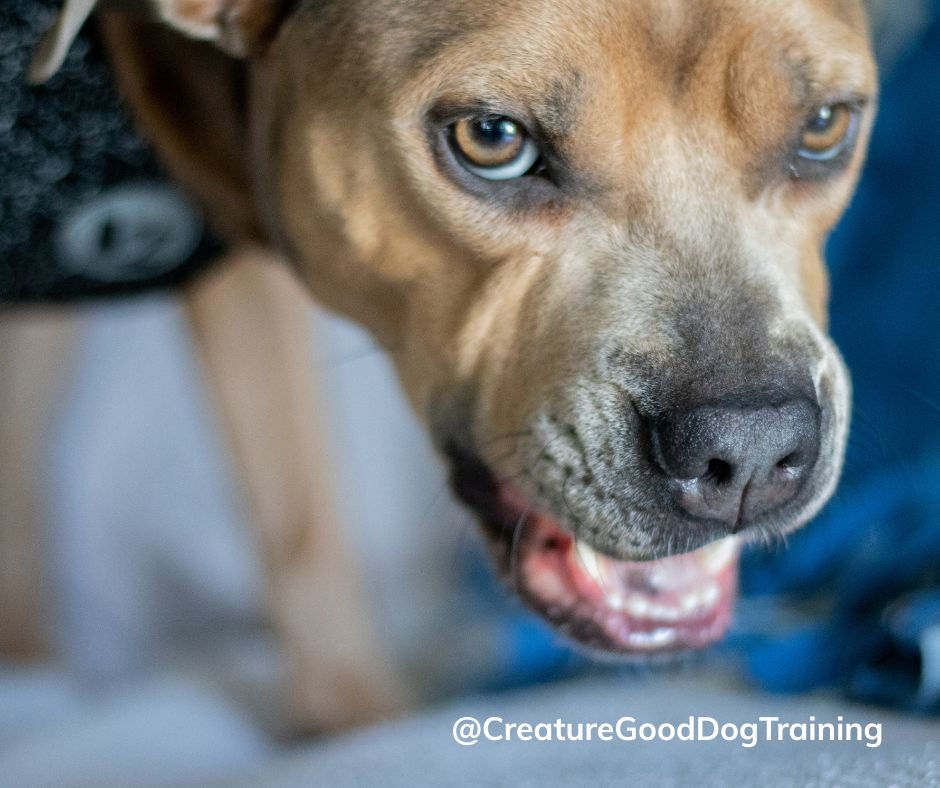
Bert - Pain can change behavior and even cause aggression
The most painful bite I’ve received - which was still a level 2 - was from one of my favorite little dogs. His name was Bert and he was much loved by his mom - and me. Bert knew me well and liked me very much. He even spent many overnights at my house when his mom travelled. Bert hung out on the couch with me and slept in my bed at night.
He bit me a few times, each bite seemingly unprovoked, meaning I wasn’t trying to pet him or do anything to him at the time. He would be sitting next to me on the couch and I’d move my hand or look at him and he’d lunge and bite me. He wasn’t big enough to cause real harm but this behavior was stressful for his family and upsetting to me in the moment. The underlying cause of his biting was medical trauma.
Bert had a complex medical condition and a history of unpleasant medical procedures that caused him chronic discomfort, anxiety, and led to his unpredictable biting habit. Sometimes I could cuddle him and rub his belly and sometimes I couldn’t. He would sometimes want to cuddle on my lap while at the same time he didn’t want me to touch him. Bert’s situation was extremely difficult and his behavior was dictated by how he felt in the moment. Bert was a good boy who didn’t want to hurt anyone but when he was in pain he lashed out.
Without understanding his medical history, someone could easily have labeled Bert as unpredictable or aggressive. In reality, he was living with chronic pain and communicating the only way he knew how in those moments. His story is a reminder that context matters just as much as the bite itself.

What Should You Do If Your Dog Bites Someone?
First off, it's important to check in with the person after securing your dog and exchange contact information. You’ll also want to share your dog’s rabies certificate with the victim so they don’t have to get rabies shots, and pay for any out-of-pocket expenses they incur as a result of the bite.
Once that’s taken care of, here’s what to do depending on the bite level:
Levels 1–2
This is what most bites will be. Level 1 doesn’t require information exchanges because there isn’t a victim as there wasn’t a bite. Still, a dog who air snaps at people may escalate to Level 2 bites so take it seriously. Dogs who bite at this level are generally excellent candidates for positive, evidence-based behavior modification. Early intervention makes a big difference. Even though these levels of bites aren't physically severe, the behavior can escalate to more severe biting so consult a qualified professional regardless of bite severity.
Level 3
A dog who bites at this level can still have successful behavior modification outcomes. You’ll need to work with an experienced behavior professional as soon as possible and a comprehensive behavior plan will be required. You’ll also want to implement management strategies like muzzle training to ensure there won’t be further bites.
Levels 4–5
These cases are extremely serious and require immediate professional assessment, careful management, and often collaboration between trainers, veterinarians, veterinary behaviorists, and local authorities. Management strategies will likely be needed long term. Depending on the jurisdiction in which you live, you may also be required to muzzle your dog and/or have mandated containment protocols.
Levels 6
The death of a person as the result of a dog attack is obviously the most serious outcome possible. Most dogs who cause the death of a person are ultimately euthanized. In most US jurisdictions, a fatal dog attack triggers the dangerous dog laws of your state and the courts get involved. Courts will typically classify the dog as vicious or dangerous and can order they be euthanized. In rare cases the owner is ordered to permanently confine the dog but most of the time humane behavioral euthanasia is the outcome.
Every dog bite should be evaluated individually. The circumstances surrounding the bite are just as important as the resulting injury.

Don't Let Fear Prevent You From Getting Help
One of the saddest things I see is dog parents waiting too long to seek help because they're afraid the trainer will tell them their dog is "bad" or beyond help. In reality, the vast majority of reactive dogs have never caused serious injury. I’ve worked with dogs with a bite history and most of them make progress. At the very least, I will never judge someone who comes to me to get help for their dog and will do my absolute best to help them.
Remember, fewer than 1% of dogs will cause serious damage to someone as the result of biting. Dogs that bite at Levels 1 and 2 aren't mean or bad dogs. They're frightened, overwhelmed, and doing the best they can to communicate in a situation they don't know how to handle.
With the right support, the vast majority of these dogs can make remarkable progress.
Nyx - From Reactive to Relaxed
Early in my career, a large, energetic dog named Nyx actually gave me half a dozen or so level 2 bites the day we met because she couldn’t handle people coming into her home and would throw herself at you nipping everywhere she could reach before being pulled away by her parents.
Fortunately, Nyx’s parents worked diligently on our training plan to support Nyx to change how she felt about guests and she ended up being able to stay happily in her “place” when guests were over.
Nyx was also leash reactive to other dogs and was also able to change her emotional response to them on walks alongside changing her feelings toward guests. Consequently her behavior around people entering her home and other dogs in the neighborhood changed for the better and she and her people were much happier.

Final Thoughts
The Dunbar Bite Scale gives us something incredibly valuable:
An objective way to talk about bites.
Instead of judging dogs by breed, appearance, barking or dramatic outbursts that can appear frightening, behavior professionals—and dog parents—can focus on measurable information that helps them assess risk and make informed decisions.
If your dog has bitten someone—or if you're worried they might—don't panic, but don't ignore it either. The earlier you seek professional guidance, the more options you'll have for helping your dog and keeping everyone safe.
When someone tells me, "My dog bit someone," my first thought isn't, "This is a bad dog.”
My first thought is, "Tell me what happened."
I want to know what the dog was feeling, what led up to the bite, what warnings were given, and what we can do differently moving forward.
Understanding the story behind the bite—not just the bite itself—is where meaningful behavior change begins.

Frequently Asked Questions
Is a Level 2 dog bite considered serious?
All dog bites should be taken seriously. A Level 2 bite involves skin contact without tooth punctures. While it shouldn't be ignored, most dogs who bite at this level respond well to behavior modification training.
Can reactive dogs be rehabilitated?
Yes, most reactive dogs—especially those with Level 1 or Level 2 bite histories—can make significant progress with appropriate training, management, and support. Also remember that most reactive dogs have never bitten anyone.
Does barking or growling mean a dog is dangerous?
Not on its own. Barking and growling communicate emotion, but they don't predict bite severity. Behavior professionals look at bite history and context when assessing risk.
For reactive dogs, most barking, lunging and growling are distance increasing behaviors intended to scare away what’s frightening them. In fact, non-reactive dogs employ this same behavior when frightened.
If a dog growls at you, do not escalate the situation by scolding or otherwise punishing the dog. Create as much space as possible between you and the dog and address the situation once the dog has calmed down. If you are not confident about how to address growling, consult a professional positive reinforcement dog trainer for help.
What is the Dunbar Bite Scale?
The Dunbar Bite Scale is a six-level system developed by Dr. Ian Dunbar that classifies dog bites based on the physical injury caused rather than how frightening the incident appeared. The scale is based on hospital data of bite victims.

Worried About Your Dog?
If your dog has bitten someone—or you're worried they might—you don't have to figure it out alone.
The earlier you understand why your dog is behaving this way, the more options you have for helping them safely and compassionately. I'd be happy to support you and your dog.



Comments