


I Was Wrong About Allie: The Training Pivot That Changed Everything

As an experienced dog trainer specializing in reactive behavior, I’ve worked with hundreds of challenging cases over the years. Most of the time, I can identify what’s driving a dog’s behavior fairly quickly.
However, I recently worked with a dog whose behavior completely changed my original assessment.
Fortunately, I realized early on that my first assumption about this dog - named Allie - was wrong, and with guidance from my mentor, I was able to pivot the training plan and turn the situation around.
When Allie’s parents reached out to me, they wanted help with Allie’s response to guests entering the home. I’ve worked with many dogs who struggled with visitor reactivity and territorial behavior, so I felt pretty confident I knew what was going on.
I was wrong.

Allie is a lovely blond mixed-breed dog who was reactive to guests in the home but friendly outside. On walks, she was social, relaxed, and eager to engage with me. But inside the apartment? Completely different dog.
If visitors came over, Allie became intensely reactive. She barked, lunged, and fixated on guests. After our first session, where I assessed Allie’s behavior (incorrectly, as it turned out), I wrote up a training plan and was ready to get to work at our next meeting.
During our second session, as I confidently followed the protocol I’d planned — one that had worked with many other fearful and territorial dogs — Allie bit me.
Thankfully, the bite was minor, but it immediately showed me I was on the wrong track and actually making Allie feel more agitated instead of safer.
Because Allie had already escalated to biting behavior, safety management and careful setup became critical throughout the training process.

When Standard Reactive Dog Training Wasn’t Working
Initially, I approached Allie’s behavior as a fairly typical case of visitor-related territorial aggression in dogs.
We started with management:
Meeting outside first
Walking together
Entering the apartment calmly
Using treats around guests
This is a common positive reinforcement strategy for fearful or territorial dogs, and honestly, it usually works.
But with Allie, progress just didn’t happen.
If I sat like a statue, Allie could almost handle it, but if I so much as crossed my legs, Allie exploded into defensive behavior. If minor movement set her off, imagine the response a guest standing up and walking across the room would get!
As it turned out, Allie wasn't so much reactive to guests as she was reactive to the movement of guests.
Now, I’ve worked with dogs who were reactive to movement outside, but I’d never seen it present this intensely inside the home.

The “Aha” Moment That Changed My Training Plan
Once I realized my original assessment wasn’t fitting Allie’s behavior, I reached out to my mentor for advice. I’m fortunate to have even smarter and more experienced people than me to consult when I need another perspective.
OK, the very first thing I did was panic a little.
I remember thinking: If I can’t help this dog, what am I supposed to do?
I knew Allie’s family had already worked with multiple trainers before me who'd given up when Allie didn't fit the usual mold. I couldn’t bear the thought of these loving dog parents feeling hopeless again.
My mentor immediately saw what was going on — as I knew she would — and her assessment completely reframed the case for me.
She explained that Allie might not primarily be struggling with the guests themselves, but with something called environmental change intolerance or sensitivity to sudden environmental contrast (SEC).
In other words, movement and changes in the environment felt threatening and unpredictable to Allie.
Suddenly, everything clicked into place.
Something as simple as crossing my legs while sitting in the living room felt overwhelming and unsafe to her.
All of Allie’s behavior finally made sense:
Standing up triggered her
Crossing legs triggered her
Moving hands triggered her
Unexpected environmental changes created stress and defensive reactions
I had been trying to teach Allie that “guests are good.” But what she really needed was to learn that guests and their movements were safe and unimportant.

The New Training Goal: Make Movement Emotionally Neutral
Once I shifted focus from guests to movement, Allie’s progress accelerated surprisingly quickly.
Instead of trying to create positive feelings around guests, I worked on making all human movement feel boring, predictable, and emotionally neutral to Allie.
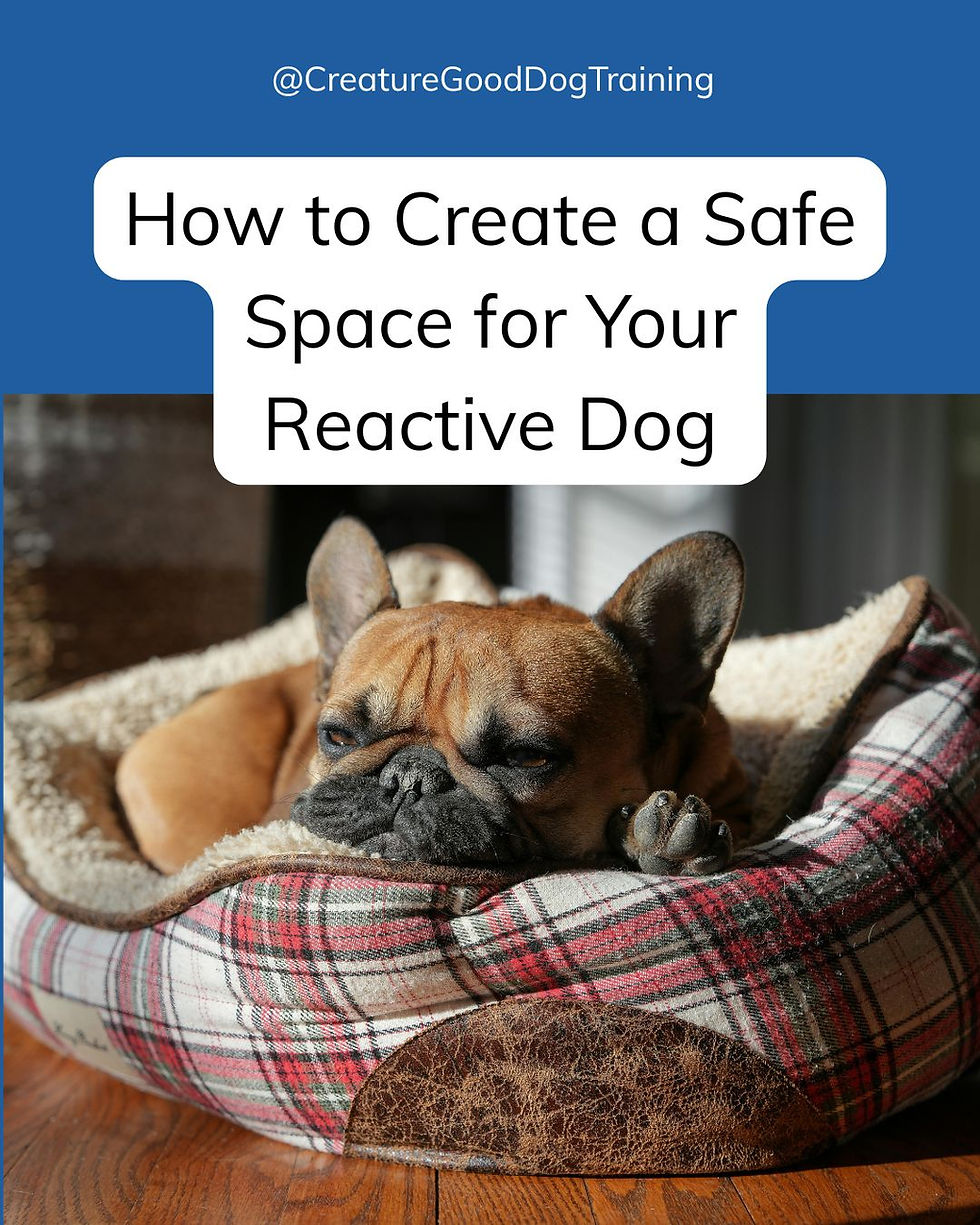
As always, the plan started with management and safety protocols. I followed this by creating a comfortable and enriching safe space for Allie. The goal was to help Allie feel safe enough to relax while life happened around her.
Once Allie was settled, I added carefully controlled movement exercises.
Here’s what that looked like:
Allie settled in her safe space with enrichment.
I made a very small movement.
Calm delivery of a high-value treat.
Pause and allow full relaxation before repeating.
That’s it. Rather than have the guests themselves equal rewards, as is the normal protocol, we wanted the presence of active humans to be completely uninteresting.
As Allie became immune to my small movements, I progressed to larger movements so that Allie could eventually feel uninterested in anything a guest may do.
And because I finally understood and addressed the real trigger, Allie improved significantly with each session.

What Allie Taught Me About Dog Behavior
This case reminded me of something incredibly important: Each dog is an individual. Just because a particular protocol works perfectly for 99 out of 100 dogs doesn’t mean it’s the right approach for every dog.
Training is about observing the dog in front of you and being willing to pivot when the original plan isn’t getting results. It's also about being willing to admit when you need to consult other experts and, perhaps most importantly, that your initial assessment may be wrong.
Sometimes, reactive dogs aren’t reacting to what we think they are. A dog who appears territorial may actually be overwhelmed by unpredictability, movement, pressure, or environmental change. That’s why individualized training matters so much in cases involving fear, anxiety, aggression, and reactivity.
Allie reinforced something I deeply believe as both a trainer and a person:
Asking for help is a strength, not a weakness.
One conversation with my mentor completely changed the trajectory of this case.
I’m deeply grateful to have the support of other incredible dog behavior professionals in my work with reactive dogs.
If my options were:
forcing Allie’s behavior into my original assessment
giving up on Allie and her family
or asking for help
…I’ll ask for help every single time.
Because not only did Allie and her family benefit, but I also learned something that will help me recognize and support similar dogs more quickly in the future.
If you’re living with a reactive or aggressive dog, know this:
Sometimes progress comes from slowing down, doing less, and looking at the behavior from an entirely new angle.
And sometimes the biggest breakthroughs start with the words: “I was wrong.”
Do you have a reactive dog and have questions about how to help them? Schedule a free Zoom consultation with me. I'd love to support you in healing your dog's reactivity.



Comments