


How to Create a Safe Space for Your Reactive Dog
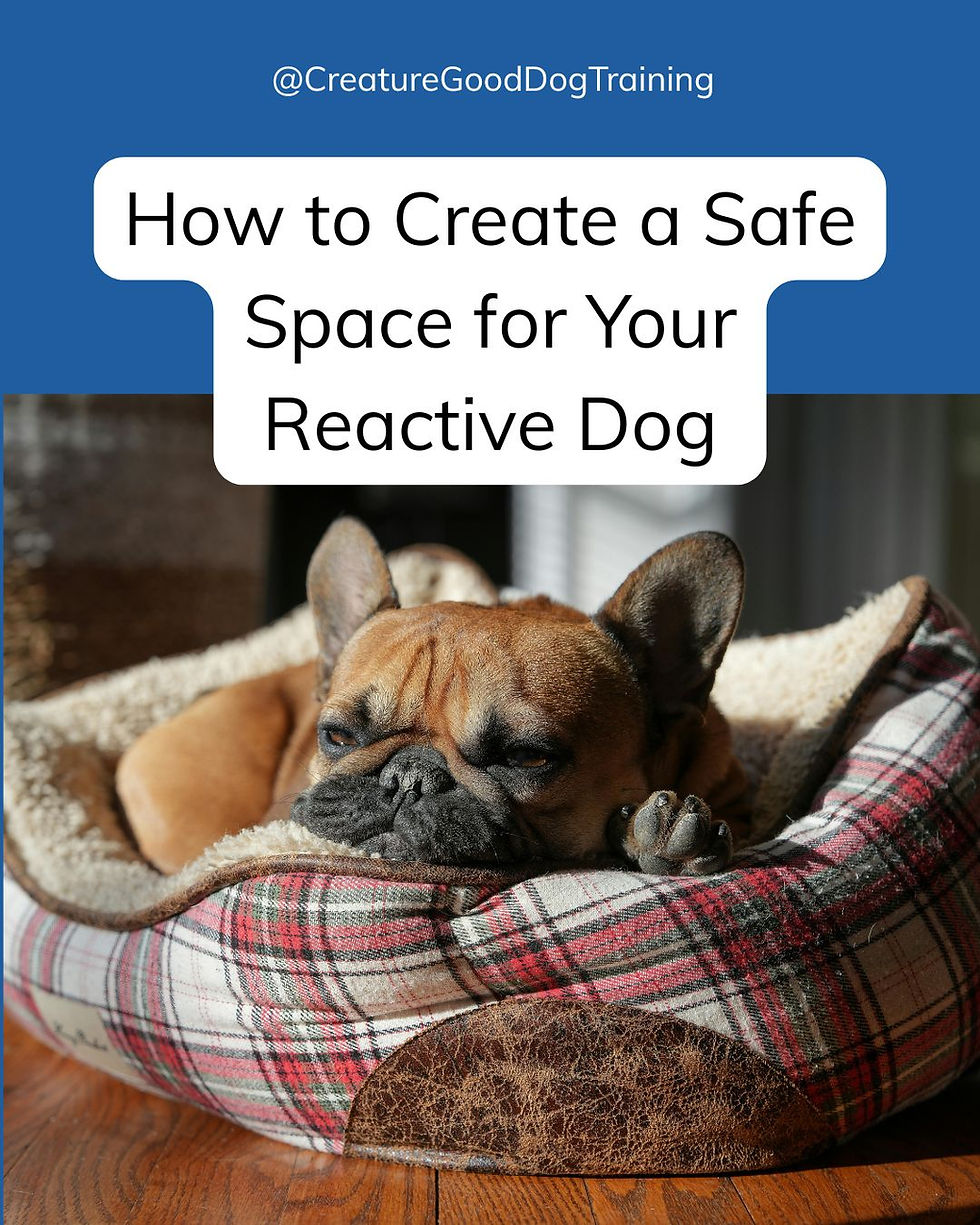
Sometimes your dog needs a break from the world - even when the world is your living room.
Visitors, household activity, unfamiliar noises, and well-meaning attention can become too much. A safe space gives your dog somewhere comfortable to retreat, rest, and be left alone.
As a dog mom and positive reinforcement reactive dog trainer, I believe every dog deserves a space they can call their own. For fearful, anxious, or reactive dogs, having a dependable place to take a break plays an especially useful part of everyday management. The most important ingredient is simple: when your dog goes there, everyone respects their space.
What Is a Safe Space for a Dog
A safe space is a resting spot your dog enjoys and can choose to use when they want some peace. It might be a bed in a quiet corner, a cozy spot under a table, or an open crate for a dog who already feels comfortable their.
I used to call this a “sacred space.” Nothing fancy or mystical—just a place where my dog could count on being undisturbed. I used the word “sacred” to emphasize the importance of the spot belonging to your dog. Think of it as the canine version of going to your room and closing the door.
Choosing to step away does not automatically mean a dog is unfriendly or poorly socialized. They may enjoy company and still need a break from it. Respecting their safe space - and their choice to go there - builds trust, reduces anxiety and is a kindness to your dog.

What My Dog Jake Taught Me About Choice
My dog Jake had a blue bed under a table against the wall. That was his safe place, and “safe place” was a phrase he knew. He also had a bed in a more open area where he could relax near the activity. Jake had options.
Sometimes Jake went to his safe space bed when he needed a break from playing with my young nephews. They also understood that when Jake was in that particular spot they needed to leave him alone.
Sometimes Jake went to his tucked-away bed when he wanted a break from something I had suggested, like grooming. When that happened, I treated it as information: he was asking for space.
Jake was prone to ear infections and needed regular ear care, which he did not enjoy. When routine care could reasonably wait, I could pause and try again later instead of reaching into his bed or pulling him out. His retreat remained a place where he could trust me to listen.
Eventually, Jake was more willing to have his ears treated because he knew he could take a break when he needed to. This was a benefit to both of us!
Necessary veterinary care is important. If your dog struggles with handling, work with your veterinarian and a qualified positive reinforcement trainer - ideally a Fear Free certified veterinarian and or trainer - on a plan that meets their medical needs while helping them feel more comfortable. The safe space itself should remain a place for taking breaks rather than a place where difficult procedures happen or can be permanently avoided.

How to Set Up Your Dog’s Safe Space
Choose a Place Your Dog Actually Likes
Start by noticing where your dog already chooses to rest. Some dogs prefer a sheltered nook; others feel more comfortable where they can still see you. A quiet spot away from the front door, busy walkways, or a window full of triggers often works well.
Use comfortable bedding and make sure there is enough room for your dog to stand, turn around, and stretch out. Keep the area at a comfortable temperature, clear of hazards like electrical cords, and easy for your dog to enter and leave. If you use a crate for this voluntary retreat, secure the door open (and never try to trick your dog to go in and then close the door on them!
In a household with multiple dogs, provide separate resting options so one dog does not have to share their retreat - unless they are a bonded pair who won’t feel comfortable separated. A safe space should feel safe from other pets when that makes the most sense.
Introduce It Before Your Dog Needs It
Set up the space on an ordinary, quiet day. You can offer a few treats there or place a familiar blanket on the bed, then let your dog explore at their own pace. Avoid pushing them in, repeatedly sending them there, or turning it into another task to perform. If your dog already shows a preference for a particular spot, that’s a great place to start.
Your dog gets to decide whether the setup works for them. If they consistently choose somewhere else, consider what that spot offers and adjust your plan.

Make the Do Not Disturb Rule Clear
Everyone in your dog’s life needs to understand the same rule: when the dog is in their safe space, leave them alone.
No reaching in to pet, groom, or move them.
No calling them out just because someone wants attention.
No teasing, crowding, or taking their chew.
No using the space as punishment.
Explain the rule to visitors before they interact with your dog. With children, an adult needs to actively supervise and prevent access when a verbal reminder alone isn’t enough. In general, dogs should also be left undisturbed when sleeping and eating as well regardless of location.
Be consistent with the safe space rule. If one or more people ignore it and invade your dog’s safe space, it ceases to be a safe space. Disregarding the rule makes the space undependable. If someone forgets, calmly stop the interaction and help everyone follow the rule consistently.
Using a Safe Space When Guests Visit
Your dog does not have to greet every visitor! They can spend some or all of a visit resting away from the activity.
If your dog needs physical separation for safety, prepare a comfortable room or gated area in advance and make sure they are comfortable with that arrangement. An accessible bed alone will not keep a guest or another pet from approaching. A dog who becomes distressed when separated may need you nearby, more practice, or a different setup.
A safe space supports a broader plan for managing reactivity. It does not replace supervision, appropriate barriers, or individual training support. The goal is to make taking a break easy before your dog becomes overwhelmed and potentially acts out.

Respecting Your Dog’s Need for a Break
Behavior is communication - for dogs and people alike. Moving away can be your dog’s way of saying, “I need some space.” When you honor that request, you give them a practical way to communicate without having to become more insistent (aka: bark, jump, etc.).
Dog parents make so many decisions for our dogs: when they eat, where they walk, who visits, and what happens during their day. Giving them some choice about rest and interaction is a small, meaningful way to meet them where they are.
A safe space doesn’t need to be expensive or elaborate. It needs to suit your dog and come with a promise that the people around them will respect it.


Comments