


Is My Dog Reactive or Aggressive? Understanding the Difference Between Reactive and Aggressive Dogs

If your dog barks, lunges, growls, or seems out of control around people or other dogs, you've probably wondered:
"Is my dog reactive, or is my dog aggressive?"
(This is a long article. If you're pressed for time, check out the Frequently Asked Questions section at the end.)
Reactive or aggressive is an important distinction and one of the most common questions I hear from dog parents. I get it because reactive and aggressive behaviors can look similar. However, they’re not the same thing because they’re rooted in different causes.
Understanding the difference will help you choose the right training approach and feel more confident about helping your dog.
Before I get into definitions, I want to say that reactive and aggressive behaviors are natural to all creatures, including humans. We all have a biological fight or flight response that kicks in when we feel threatened. Recognizing these tendencies in our dogs isn't an indictment of them as individuals. The reason to learn about and identify unwanted or potentially dangerous behavior patterns in our dogs is so we can help them change, not judge them or their human parents.
I have parented a reactive dog, an aggressive dog, and a sweet friendly dog, and I have loved them all. Their needs were different, as were the root causes of their behavior, yet they were all good dogs.


Reactive vs Aggressive Dogs: Quick Answer
Reactive dogs and aggressive dogs can look very similar because both may bark, growl, lunge, snap, or otherwise appear threatening.
The key difference is motivation.
Reactive dogs are typically emotionally overwhelmed and trying to create distance from something that makes them fearful, anxious, frustrated, or overexcited. Dogs displaying aggressive behavior are more likely to escalate toward a bite or physical confrontation if they feel their warnings are ineffective.
Understanding the emotions driving your dog's behavior is far more useful than focusing on the label itself.
Why Reactive and Aggressive Dogs Can Look Similar
Both reactive and aggressive dogs may:
Bark
Growl
Lunge
Snarl
Snap
Show their teeth
Appear intimidating
From the outside, these behaviors can look identical—and scary.
The difference is less about what your dog is doing and more about why they're doing it.
If you've read any of my articles, you know I'm always saying, "Behavior is communication." In order to understand what your dog is saying through their behavior, we need to look beyond the barking and lunging and consider the emotions driving the behavior.
What Is a Reactive Dog?
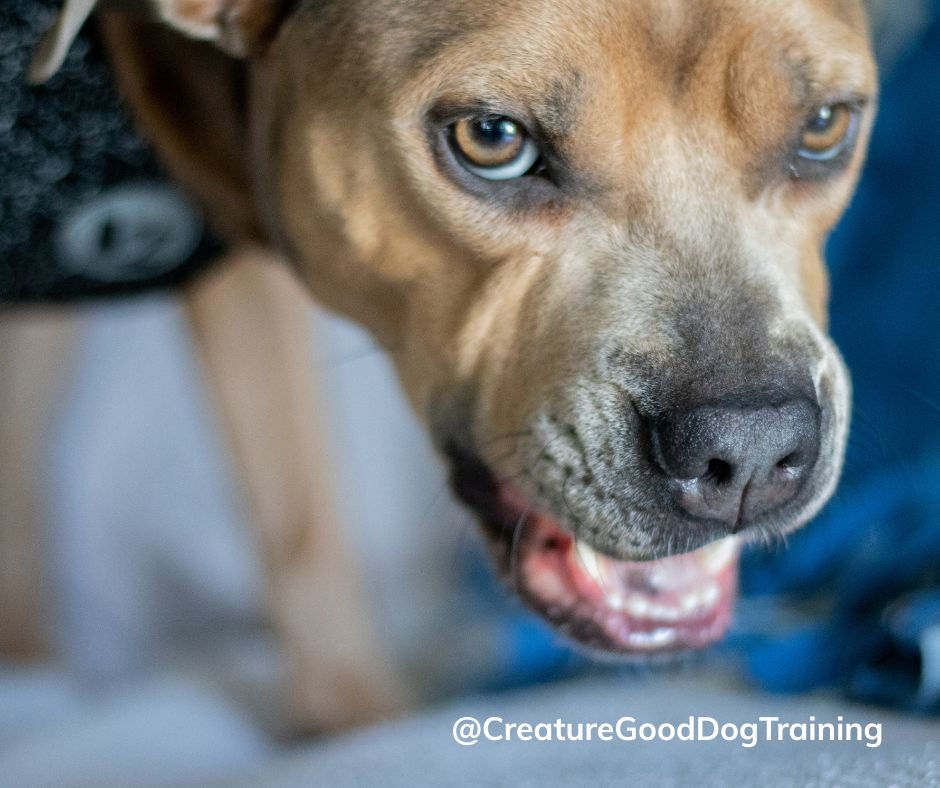
Reactivity is an umbrella term used to describe a variety of behaviors. Essentially, a reactive dog is one who overreacts to something benign in their environment. They perceive danger where none actually exists.
For example, I've recently discovered that my dog Archie is reactive to balloons. He sees a balloon and reacts as though it were a live grenade even though the balloon poses no danger to him at all.

Reactive dogs can be triggered by just one or many things. Some common reactivity triggers are:
Other dogs
People
Bicycles
Skateboards
Cars
Wildlife
Sounds
Movement
As much as reactive behavior looks scary and aggressive, most reactive dogs aren't trying to hurt anyone. They feel uncomfortable, overwhelmed, anxious, frustrated, scared, or overexcited. They are trying to cope with these emotions and simply don't know how.
When a reactive dog barks and lunges, they're basically saying:
"That thing makes me nervous."
"Please go away."
"I can't handle this right now."
"I'm too excited to think clearly."
Many reactive dogs are engaging in distance-increasing behavior rather than actively trying to cause harm.
Reactive behavior is rooted in emotional conflict rather than any intent to cause harm.
What Is an Aggressive Dog?
Aggression in dogs is natural and simply another way to communicate. It can even be caused by fear just like reactive behavior.
The main difference is that a dog displaying aggressive behavior is more likely to escalate if their warnings fail to create safety or distance. They may bite to defend themselves from a perceived threat or to protect something they consider valuable, such as food, toys, sleeping spaces, or chews (aka: resource guarding).
Aggression isn't a personality trait; it's an instinctual form of communication.
Aggressive behavior, like reactive behavior, may be intended to increase distance from a trigger or to potentially cause harm. Aggression is far more likely to lead to bites than general reactivity.

Aggressive behaviors can include:
Growling or snarling
Attempting to bite
Repeated snapping
Serious threats that escalate toward contact
Dogs may behave aggressively because they are:
Afraid
Protecting resources
Protecting territory
In pain
Feeling trapped
Experiencing chronic stress or illness
Responding to warning behaviors that have been ignored
Experiencing the fallout of repeated punishment
In many cases, aggression is driven by fear, just as reactivity can be. My first dog Jake became fear aggressive toward other dogs after being badly attacked by a dog who’d previously been his friend. The difference between reactivity and aggression comes down to the fight-or-flight response, past experience, genetics, and the context of the situation.

Can Reactive Dogs Bite?
Yes. Absolutely.
This is where things can get confusing. There is significant overlap between reactive and aggressive behavior.
Reactive dogs may bite if they are pushed beyond what they can cope with. All living creatures are capable of violence under specific circumstances. That includes you and me as well as fear-reactive dogs.
Imagine a dog who barks and lunges at strangers because they're uncomfortable around unfamiliar people. If the dog's communication is ignored and a stranger continues to approach or touch them, that dog may bite.
From the dog's perspective, the bite is a last resort effort of self-defense.
This doesn't necessarily mean the dog is aggressive. It means the dog acted aggressively at that moment.
This is a pivotal moment for the dog because once a dog discovers that biting successfully makes scary things go away, they are more likely to use that strategy again in the future.
Whenever a dog does something and it works to get them what they want, they are more likely to repeat it. The more a dog practices a behavior, the stronger that behavior becomes.
For this reason, reactive behavior should never be ignored simply because the dog hasn't bitten. Early support prevents escalation and improves quality of life for everyone involved.
There is an exception to this and that is when a dog is genetically predisposed toward aggression. Dogs can be bred for aggression through irresponsible breeding practices, such as those associated with dog fighting, or by breeders who fail to prioritize stable temperaments.
A genetic predisposition requires thoughtful management, socialization, and training. However, genetics alone do not determine a dog's future behavior. Reactivity and aggression are complex polygenic traits (meaning more than one gene impacts the behavior) influenced by genetics, environment, socialization, learning history, experienced trauma, health, and training.

Signs Your Dog May Be Reactive
Your dog may be reactive if:
Their behavior happens only around specific triggers
They calm down once the trigger leaves
They seem worried, overwhelmed, or frustrated
Their reactions occur primarily on walks or in specific situations
They can function normally when enough distance from the trigger is provided
Many reactive dogs are perfectly friendly in the right environment. I’ve worked with many leash reactive dogs who happily go to daycare and play with off-leash dogs all day.
Signs Your Dog May Need an Aggression Assessment
Professional assessment is especially important if your dog:
Has bitten a person or another dog
Has attempted to bite
Shows escalating warning signals
Guards food, toys, or resting spaces
Behaves aggressively in multiple contexts
Causes you to feel unsafe
The goal isn't to label your dog, it’s to understand what's driving the behavior so you can get the right help.

Why the Difference Matters
When people assume their reactive dog is being dominant or stubborn, they often focus on suppressing the behavior rather than understanding what is causing it.
Barking, growling, and lunging are symptoms of an emotional problem, not disobedience.
Whether your dog is reactive, aggressive, or displaying elements of both, lasting change comes from understanding how your dog feels and helping them develop new coping skills.
The goal isn't simply to stop the behavior. The goal is to help your dog feel safe enough that the behavior is no longer necessary.
Successful reactive dog training focuses on changing your dog's emotional response to triggers first, then the barking and lunging cease to be necessary to your dog.
Focus on Understanding Your Dog, Not Labeling Them
One of the biggest mistakes I see dog owners make is getting stuck on labels.
Dog behavior exists on a spectrum, just like human behavior. Some reactive dogs may become aggressive if pushed too far. Some aggressive dogs are reacting from fear. Many dogs don't fit neatly into a single category.
Instead of asking, "What label fits my dog?" ask yourself, "What is my dog trying to communicate?"
That question is far more likely to lead you toward a meaningful solution.

Frequently Asked Questions About Reactive and Aggressive Dogs
Can Leash Reactivity Turn Into Aggression?
Sometimes.
If a reactive dog repeatedly feels trapped, overwhelmed, or learns that more intense behavior successfully creates distance from a trigger, their behavior can escalate over time. This is one reason early intervention is so important.
The sooner you help your dog develop healthier coping skills, the less likely the behavior is to worsen.
Are Reactive Dogs Dangerous?
Not necessarily.
Most reactive dogs are struggling with intense emotions rather than actively trying to hurt someone. However, all dogs are capable of biting under certain circumstances, especially if they feel trapped, threatened, or pushed beyond what they can safely handle.
This is why understanding and addressing reactive behavior early is so important.
Can Reactive Dogs Bite?
Yes. All dogs are capable of biting.
While many reactive dogs are barking and lunging because they feel scared, overwhelmed, or frustrated and would happily run away from the scary thing if not tied to a leash, others may bite if they feel trapped or are pushed beyond what they can handle.
This is one reason it's important to take reactive behavior seriously and seek help early.
Is a Reactive Dog the Same as an Aggressive Dog?
No.
Reactivity and aggression are not the same thing, although they can look very similar and there is a significant amount of overlap in their behavior.
Reactive dogs often bark, lunge, or growl because they are emotionally overwhelmed and would most likely run away or hide if given the opportunity. Many reactive dogs are engaging in distance-increasing behavior rather than actively trying to cause harm.
Aggression involves a greater likelihood of escalation toward biting or attempting to bite if the dog feels their warnings are not working. Both reactive and aggressive behaviors are intended to create safety or increase distance from a perceived threat. Aggressive behavior can be caused when a dog’s warnings of discomfort - like growling - are ignored. This was the case with my dog, Shadow Dawn. By the time she got to me she was so traumatized she would go straight to biting rather than giving any warning signs at all.
Is Dog Reactivity Caused by Fear?
Fear is one of the most common causes of reactivity, but it isn't the only one.
Some dogs react because they're frustrated, overexcited, seeking attention, or unable to cope with a particular situation. An often-overlooked cause of reactive behavior is pain, which is why I always recommend starting with a veterinary examination if your dog suddenly becomes reactive.
Understanding the emotions driving the behavior is an important part of creating an effective reactive dog training plan.
Can Reactive Dogs Get Better?
Yes!
With the right support, management, and training, reactive dogs can learn new skills, feel more comfortable around triggers, and change their behavior for the better.
Some dogs recover completely while others experience significant improvements in their quality of life and ability to navigate the world. Progress looks different for every dog, but positive change—and at minimum a reduction in reactive behavior—is absolutely possible.
What Should I Do If My Dog Barks and Lunges at Other Dogs?
Start by creating more distance from the trigger whenever possible.
Avoid forcing interactions and pay attention to your dog's body language. Distance is one of the most powerful tools available when helping a reactive dog, especially at the beginning of their healing journey.
Every dog's situation is unique, which is why working with a qualified professional who specializes in reactive behavior is so important. A personalized training plan addresses the root causes of the behavior rather than simply trying to suppress it.
When Should I Seek Professional Help?
Seek professional help as soon as you notice reactive behavior in your dog.
First, consult your veterinarian to ensure there isn't a medical cause contributing to the behavior. Once medical issues have been ruled out—or if the behavior continues after treatment—reach out to a positive reinforcement trainer who specializes in reactive behavior. If you're interested in working with me, schedule a free consultation here.
Other signs it's time to get help include:
The behavior is worsening.
You feel stressed or overwhelmed.
Other household pets are affected.
Your dog has bitten or attempted to bite.
There is a risk of injury to people or animals.
Early intervention is easier, safer, and more effective than waiting for the behavior to worsen.
Can Aggressive Dogs Be Helped?
Many dogs displaying aggressive behavior can make significant progress with appropriate management, behavior modification, professional support, and sometimes medication.
The first step is understanding what is driving the behavior so that a safe and effective treatment plan can be created.
While not every dog will become a social butterfly, many can learn safer, more appropriate ways to cope with difficult situations and enjoy a much better quality of life.
Is My Dog Trying to Dominate Me?
Nope.
Dogs don't spend their days trying to take over the household or become the boss.
While dogs may display dominant behavior in specific situations—such as safeguarding access to a valued resource—dominance is not a personality trait that explains reactive or aggressive behavior.
Most reactive and aggressive behaviors are rooted in emotions such as fear, anxiety, frustration, stress, or excitement rather than a desire to control people.
Modern behavioral science has largely moved away from dominance-based explanations for problem behavior. Positive reinforcement trainers focus on understanding the emotions and learning processes behind behavior so they can create lasting change without fear, intimidation, or punishment.
Need Help Understanding Your Dog's Behavior?
If you're reading this because walks have become stressful, having guests over is difficult, or you're worried your dog's behavior is getting worse, you're not alone.
Whether your dog is reactive, aggressive, or somewhere in between, the first step is understanding what's driving the behavior.
A professional assessment will identify the underlying causes of your dog's behavior and help you create a training plan that works for both you and your dog.
You don't have to figure it out by yourself.


Comments