


Reactive Dog Training Isn’t Just About Behavior—It’s About Changing How You See Your Dog

If you live with a reactive dog, you’ve probably been told - explicitly or implicitly - that your dog is “disobedient,” “stubborn,” or even “aggressive.” And worse, that your dog is somehow doing it on purpose.
Dog reactivity is challenging, and comments like these never help, especially when it comes to reactive dog training.
If you hear these types of remarks often enough, it can harm how you feel about your dog when they bark or lunge. Those feelings then change how you respond to the behaviors in the moment and long term.
How you respond to your dog’s behavior has a dramatic effect on whether or not real, lasting progress happens.
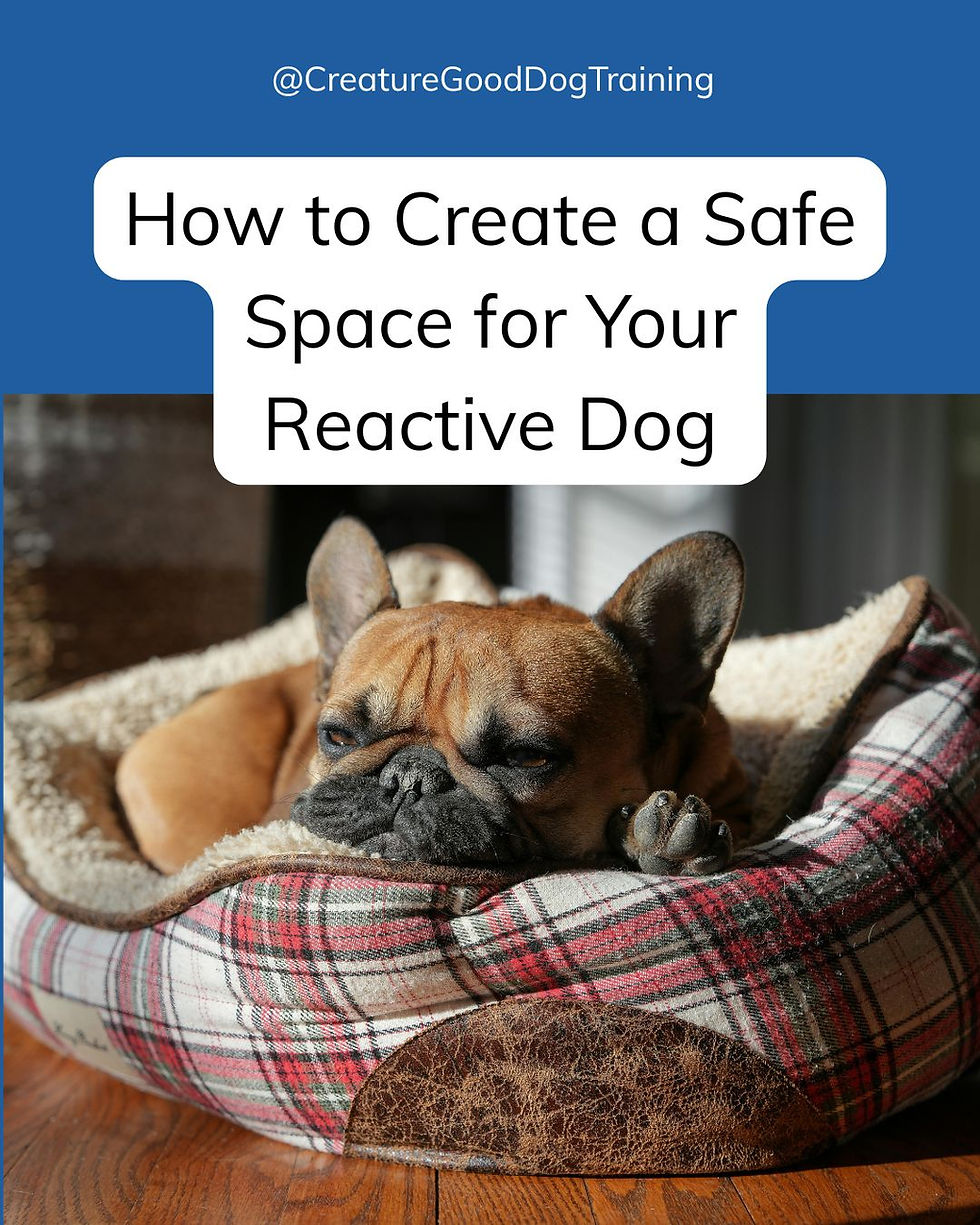
This all happens because dog reactivity isn’t a behavior problem—it’s an emotional issue.

You can’t change emotions through obedience training. You need a specialized approach that addresses the whole dog by building confidence, reducing anxiety, addressing human-dog interactions, and then you can change the behavior long term.
The Missing Piece in Most Reactive Dog Training Programs
The missing piece🧩 that makes working with reactive dogs harder and limits success is addressing the human mindset. In my work with reactive dogs, I don’t just focus on what to do when your dog reacts; I focus on helping you understand why it’s happening—and how to see the behavior from a new perspective.
This is a foundational part of my CHARM process.
Instead of viewing reactivity as disobedience, put yourself in your dog’s place and shift to seeing their behavior as:
An attempt to deal with overwhelming emotions
A nervous system that’s over-activated
An attempt to create safety or distance from something scary
Natural dog behavior meant as communication, not defiance
When you start to see your dog’s reactive behavior in this way, it’s easier to empathize with them and envision how to help them.

From “Fixing” Behavior to Supporting Your Dog’s Healing
Let’s say your dog barks and lunges at another dog on a walk. If you believe, “My dog is being a jerk. They always do this and embarrass me,” you’re much more likely to want to “correct” the behavior through obedience training.
However, if you understand: “My dog is struggling with overwhelming emotions and doesn’t feel safe,” your response shifts toward supporting your dog to feel better through guidance and skill-building.
That shift isn’t just philosophical because it directly impacts your dog’s progress.
Nobody - dogs or people - learns well when they’re overwhelmed and can’t focus and process. Creating a situation in which your dog feels safe is essential for a learning environment.

Why Mindset Matters in Reactive Dog Training
Much of reactive dog training focuses only on techniques—treats, timing, distance, setups.
And those things do matter. However, without the right mindset, even the best techniques fall flat (and cause frustration for both you and your dog).
Approaching training a reactive dog with frustration, a sense of urgency, or the belief that they “should be able to handle this,” causes more stress all around and results in more reactive behavior.
Shifting perspective helps you:
Be more patient and consistent when working with your dog
Recognize your dog’s early signs of stress so you can avoid escalation
Make better training decisions in real time and get better results
Build trust and partnership with your dog instead of creating more tension
Truly, this one mindset shift is what leads to real transformation for both of you.

You’re Not Just Training Your Dog—You’re Changing the Relationship They Have with Triggers
Helping a reactive dog isn’t about obedience. It’s about helping them feel safe in a world that can feel overwhelming. That’s the simple mindset shift. Rather than “see” the behavior, “listen” to what your dog is trying to communicate.
Combine mindset with the rest of the CHARM process for lasting healing from reactivity.



Comments