


Why Teaching Your Reactive Dog to Look at You Changes Everything

There’s a unique kind of grief reactive dog parents feel when you’re on a walk and suddenly realize your dog can’t hear you anymore.
Not that they aren’t listening — but that they can’t hear you because they’re completely overwhelmed by a trigger.
You say their name — nothing. You wave treats — nothing.
They’re stuck inside their own head because the world has become too loud, too close, too much. And in that moment, you feel invisible.
It’s heartbreaking.
When it happens, it’s easy to interpret this as stubbornness or disobedience. But what’s really happening is far more complicated — and far more sensitive. Your dog isn’t ignoring you. They’re panicking. They’re hyper-focused on what feels threatening, and their nervous system has taken over.
The good news? This dynamic can change — once you know what to do.

YOU Can Become Your Dog’s Safe Place
For reactive dogs, focus isn’t about manners or control. It’s about where safety lives.
When your dog can briefly turn their attention toward you — even for a second — it creates a pause in the chaos. A tiny window where their nervous system can breathe.
Without the ability to shift focus away from a trigger and toward you, your dog is left to manage a frightening world alone. A scared dog, without guidance, will make choices that look like barking, lunging, jumping, or shutting down.
👉 That’s why the third step in my free guide, 3 Small Changes That Create Big Relief for Reactive Dogs and Their People, focuses on teaching focus before you ever need it.
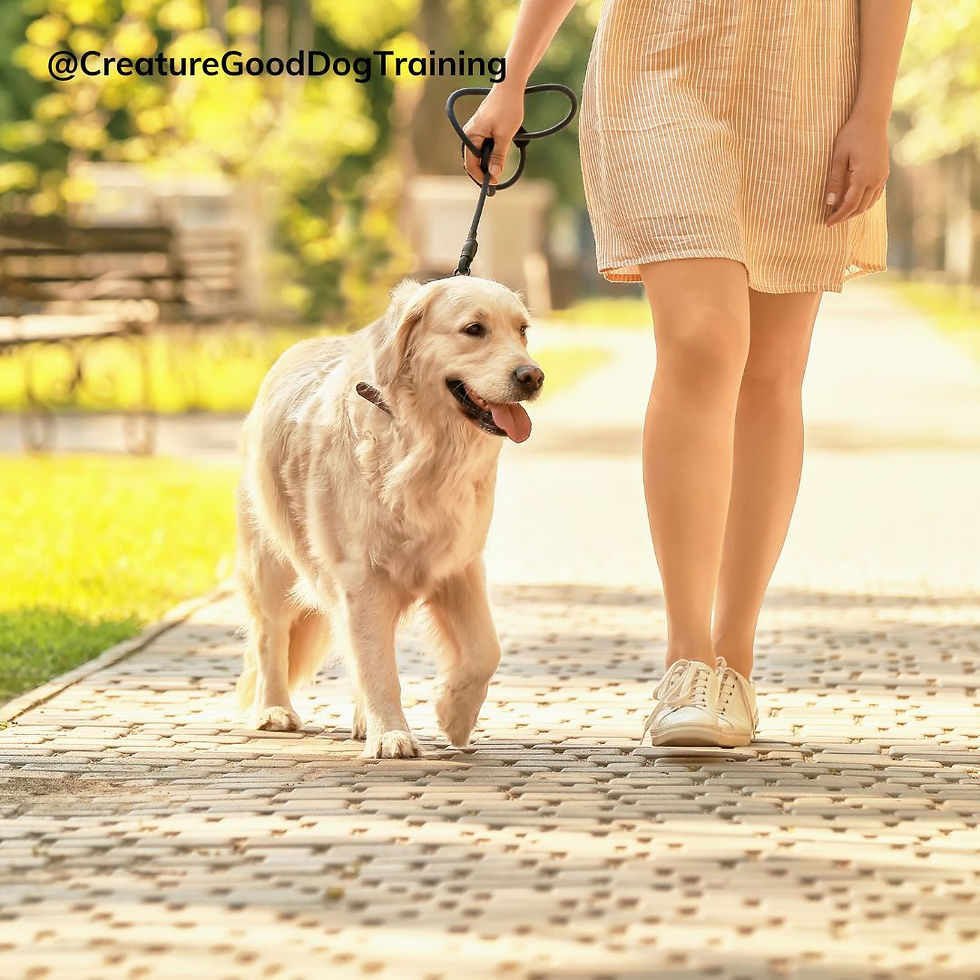
Focus Is a Relationship Skill, Not a Training Cue
In the dog world, direct eye contact can be rude — even threatening — between unfamiliar dogs or strangers. But between dogs and humans who trust each other, eye contact is connection.
Teaching your dog to turn toward you when they feel uncomfortable gives them a safe place to anchor instead of spiraling. It keeps them from completely losing their sh*t when stress hits.
Imagine facing something terrifying and, instead of panicking, turning to someone you trust completely — someone who knows what to do. That’s what focus gives your dog.
That’s why I consider focus a relationship skill, not a training cue. You’re not demanding behavior. You’re offering support.
Practicing focus at home, in calm moments, builds a pattern your dog can fall back on later. Over time, it becomes an automatic check-in:
Are you there? Are we okay? What should we do?
Consistently answering those questions with safety, trust, and rewards changes behavior naturally.

Why This Small Skill Feels So Big
Clients often tell me this is where everything shifts. Not because their dog suddenly loves walks — but because they finally feel like a team again.
A dog who can give you their attention:
Is easier to guide away from trouble
Recovers faster after scary moments
Feels less pressure to make decisions alone
And you? You stop dreading walks. You stand taller. You breathe easier. You stop feeling like you’re failing.
👉 Inside the free guide, I show you how to start teaching focus gently and without pressure — beginning indoors, long before triggers appear.

If Your Dog Struggles With Focus
Some dogs need more nervous system support before focus becomes possible — and that’s okay.
This is where the other small changes matter. Skipping some walks and creating a calming routine lowers stress and builds emotional resilience, making focus easier to learn.
I explain how all three steps work together in the overview post, 3 Small Changes That Create Big Relief for Reactive Dogs and Their People. When you put them together, you create real, sustainable change.

You Are Already What Your Dog Needs Most
You don’t need to work harder or be stricter. You need to be present, predictable, and safe.
👉 Download the free guide: 3 Small Changes That Create Big Relief for Reactive Dogs and Their People.
Small moments of connection can become something your dog relies on — no matter what’s happening around them.



Comments